Biography
1925-1945
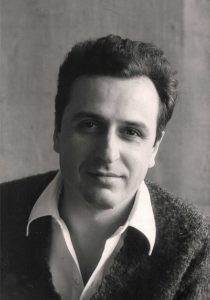
Arturo Carmassi was born in Lucca on 2 July 1925. His mother died in childbirth and he was entrusted to his maternal aunt. His uncle, a socialist, moved the entire family to Turin in 1929, a city then more open to anti-fascist ideas. It was in this context that Carmassi began painting. At the age of nineteen he entered the A. Fontanesi School of Landscape, with a brief passage at the Accademia Albertina.
From his early post-war years, the artist displayed a strong intellectual independence: while operating within a context dominated by various currents of neo-Cubism, ranging from realist tendencies to more abstract approaches, he maintained an autonomous and original position.
During the Second World War, bombings struck both the Academy and the family home, resulting in the loss of his entire early production. Family portraits, numerous landscapes, and some large-format nudes were destroyed.
1946-1951
The encounter with Europe and the arrival at Informalism
1952-1954
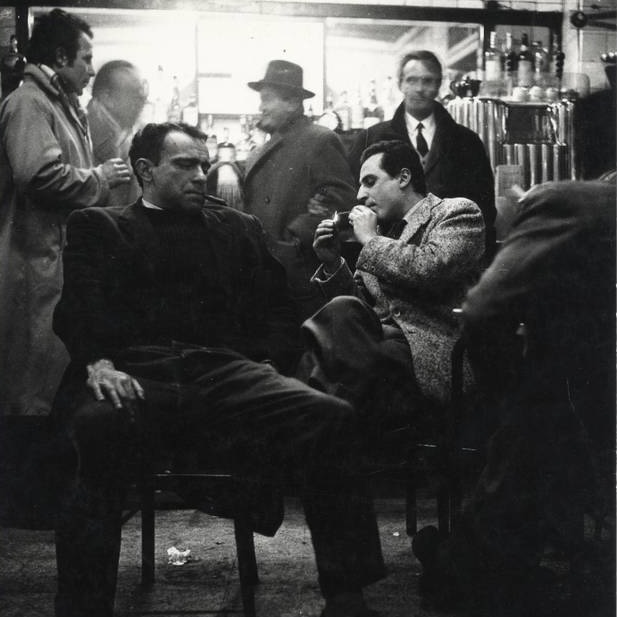
Milan and the dialogue with the avant-gardes: toward matter
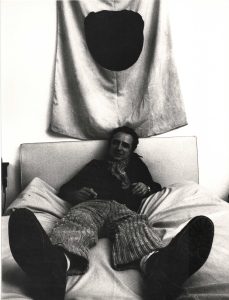
After travelling across Europe and staying in Paris, in 1952 Carmassi moved to Milan in a large studio in Corso Garibaldi. Here he came into direct contact with the artistic avant-gardes and developed a friendship with Lucio Fontana. During these years his painting took on an Informel direction, permeated by surrealist influences.
In 1954 he held his first solo exhibition at the Galleria Il Milione, introduced in the catalogue by Franco Russoli. In this context he met Gino Ghiringhelli, who would become his dealer. During these years he began a research into collage, understood as a rigorous investigation of space and volumetric structures. From the mid-1950s he also approached sculpture, sensing the need to give a more solid formal consistency to the painterly gesture.
1955-1960
Carmassi on the international scene between Europe and the United States
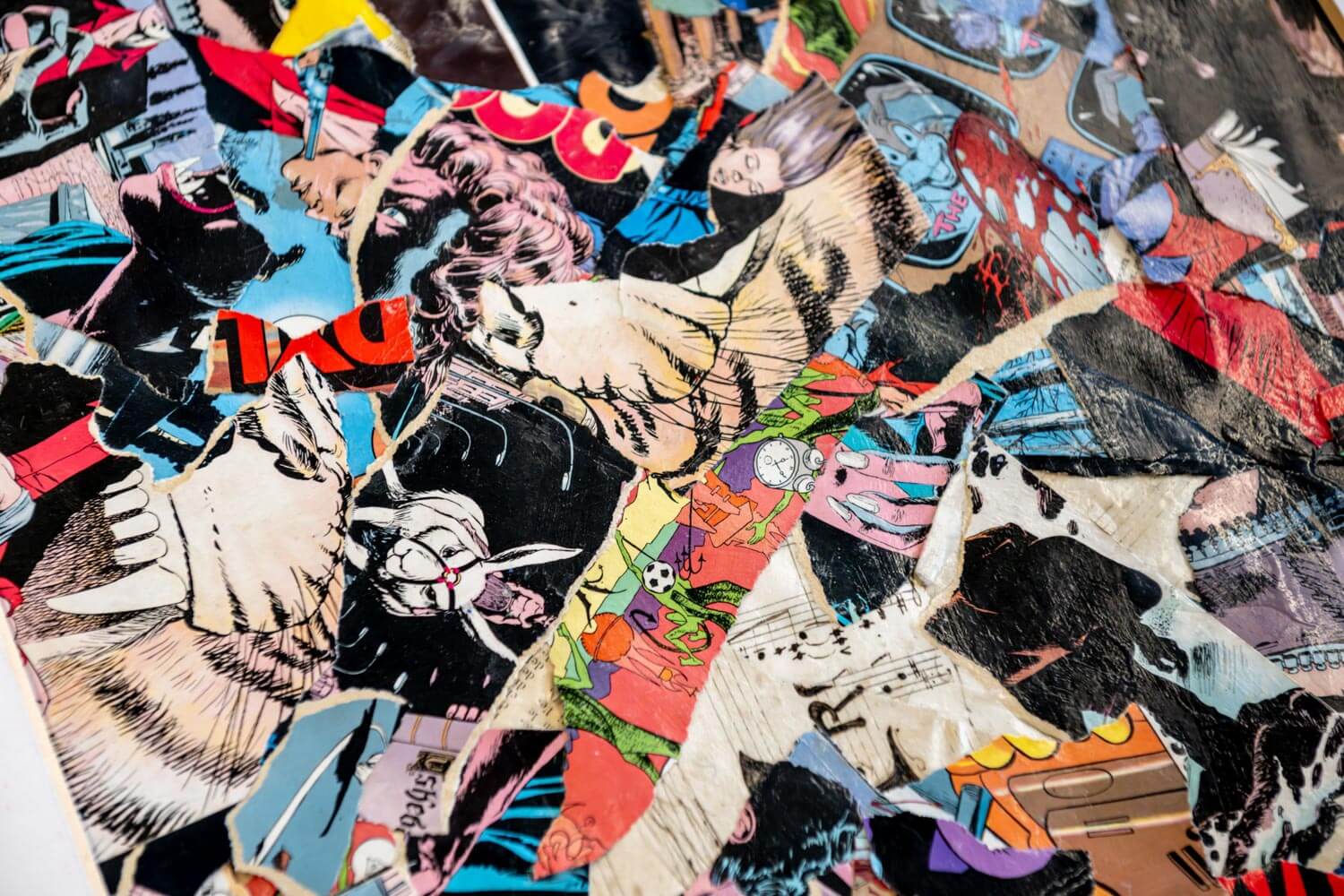
During the 1950s, Carmassi intensified his presence on the international art scene. He travelled to the United States and arrived in New York, entering a cultural context undergoing profound transformation.
In 1957 his works were presented in the “Italian Watercolour Exhibition” at the Brooklyn Museum, and in the same year he took part in the “10-Darmstädter Session” of Italian sculptors in Darmstadt. The following year his exhibition activity further expanded, with participation in the Antwerp Sculpture Biennale, the exhibition “Junge Italienische Plastik” in Darmstadt and Düsseldorf, and “Moderna italiensk maleri” in Copenhagen.
Invited to the group exhibition “Giovane pittura italiana” at the Palazzo della Permanente, in 1960 his critical profile was consolidated through the publication of the first monograph dedicated to him, curated by Franco Russoli. In the same period he held his third solo exhibition at the Galleria Il Milione.
His international activity continued with participation in “Contemporary Italian Art” at the Illinois Institute of Technology in Chicago, in “Exhibition of Italian Contemporary Art” in Johannesburg, organised by the Italian Trade Agency, and in the travelling exhibition “The New Generation in Italian Art”, presented in Dallas, San Francisco, and again in New York.
1961-1969
The overcoming of Informalism and the irruption of myth
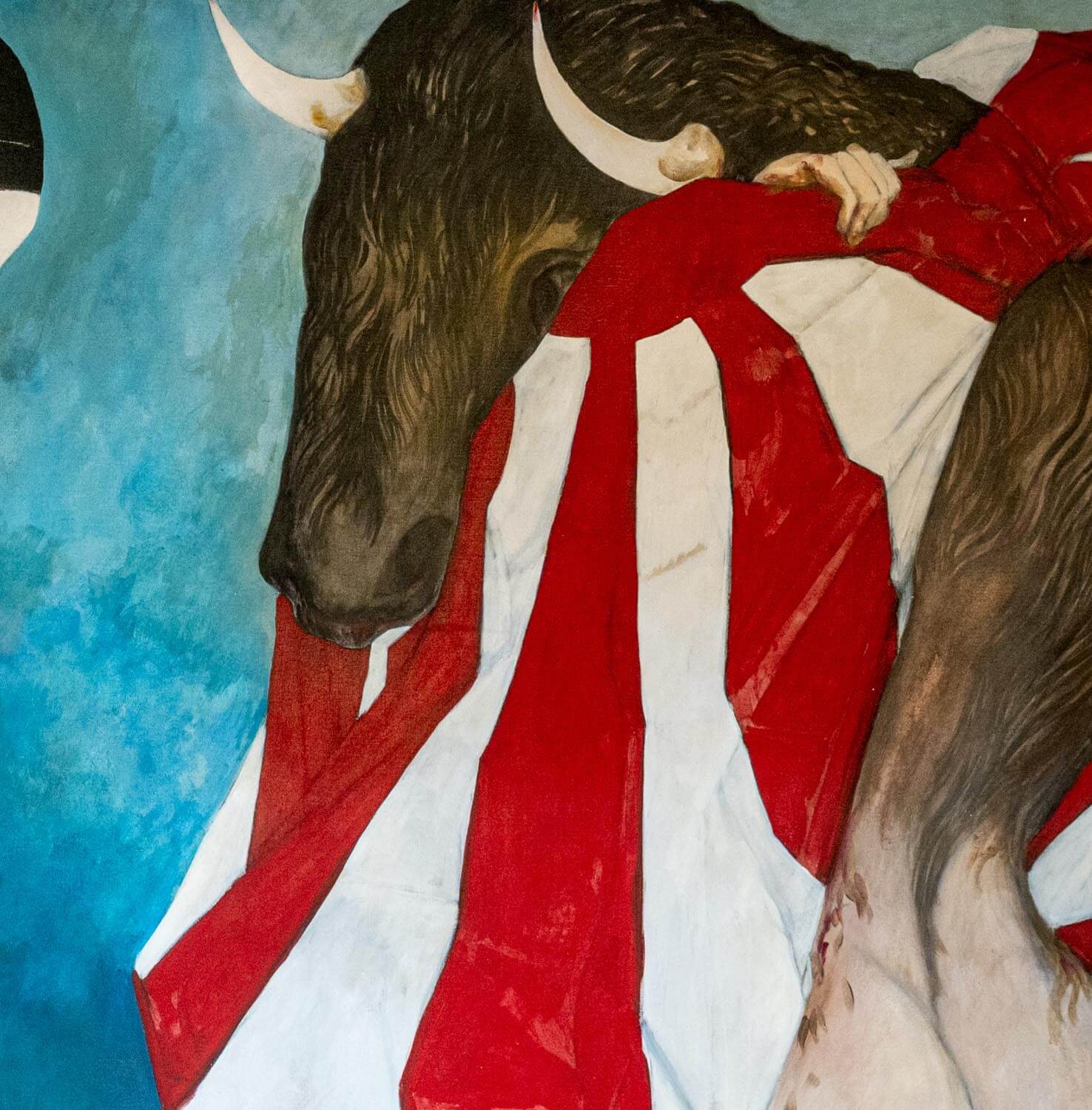
The language of his early work is grounded in a personal interpretation of Informal abstraction. By the late 1960s, as Raffaele Carrieri observes, his expression shifts direction and recovers the objective datum of the image, returning to the representation of landscape and figure.
It was during this period that he became friends with Patrick Waldberg, close to André Breton. By the end of the decade his figurative research reached particularly intense outcomes, giving form to an imaginary and fantastic dimension in which the magical, the mysterious, and the occult emerge.
His ties with the Surrealist milieu were strengthened through contacts with figures such as Pierre Klossowski, Georges Bataille and André Masson, as well as through the study of the intellectual legacy of Alfred Jarry and Antonin Artaud. Around 1970, he moved to Tuscany. After briefly living in the historic Villa Montorsoli in Castelfiorentino, he purchased a farmhouse in Torre di Fucecchio, which would become his home and studio for the rest of his life.
1970-1977
The “Journal Perpétuel” and the renewed relationship with sculpture
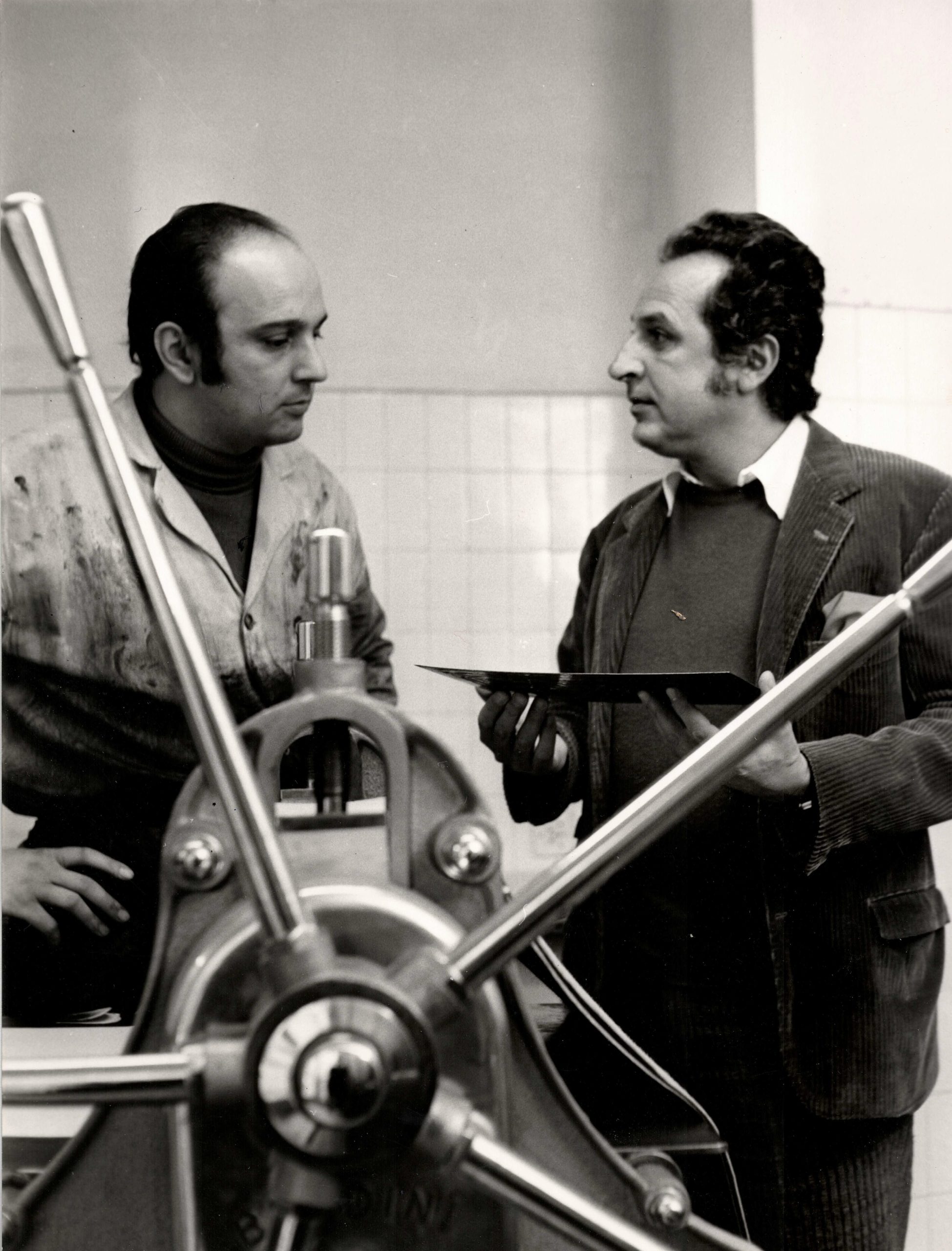
Carmassi’s technical investigation reaches its peak with the creation of the Journal Perpétuel, or the possibilities of the sign, an extensive body of three hundred etchings that merge the immediacy of spontaneous gesture with the rigor of reflection.
The work became the focus of a prestigious international tour across major institutions such as the State Calcography in Rome, the Musée Cantonal des Beaux-Arts in Lausanne, the National Gallery of Athens, the Galeria de exposições temporárias in Lisbon, and the Museu de Arte de São Paulo. It was in Brazil, during this stage of the tour, that filmmaker Patrick Goetelen dedicated the portrait film “Carmassi Miscellanea” to the artist.
In 1974, he married Marise Druart, his second wife, who would become a constant presence throughout his personal and artistic life. From this moment on, driven by a profound fascination, they expanded their collection of African art with valuable examples of masks and statues.
By the mid-1970s sculpture assumed a dominant role, driven by the need to give greater structure and plastic force to his imagery.
In 1977 the exhibition at Palazzo dei Diamanti, introduced by Pierre Restany, marked a turning point: emblematic works were presented on this occasion, including the sculpture Archetypes, the painting Origins, and the large etchings Altamira and Canaveral.
The intensification of sculptural and lithographic activity led to a progressive distancing from figuration, orienting his research toward a radical investigation into the origins of the sign. Collage established itself as a structural element of the work, no longer a mere marked surface but a sign in itself.
1978-1980
The relationship with Jean-Marie Drot and the “Cosmogony” at Villa Medici
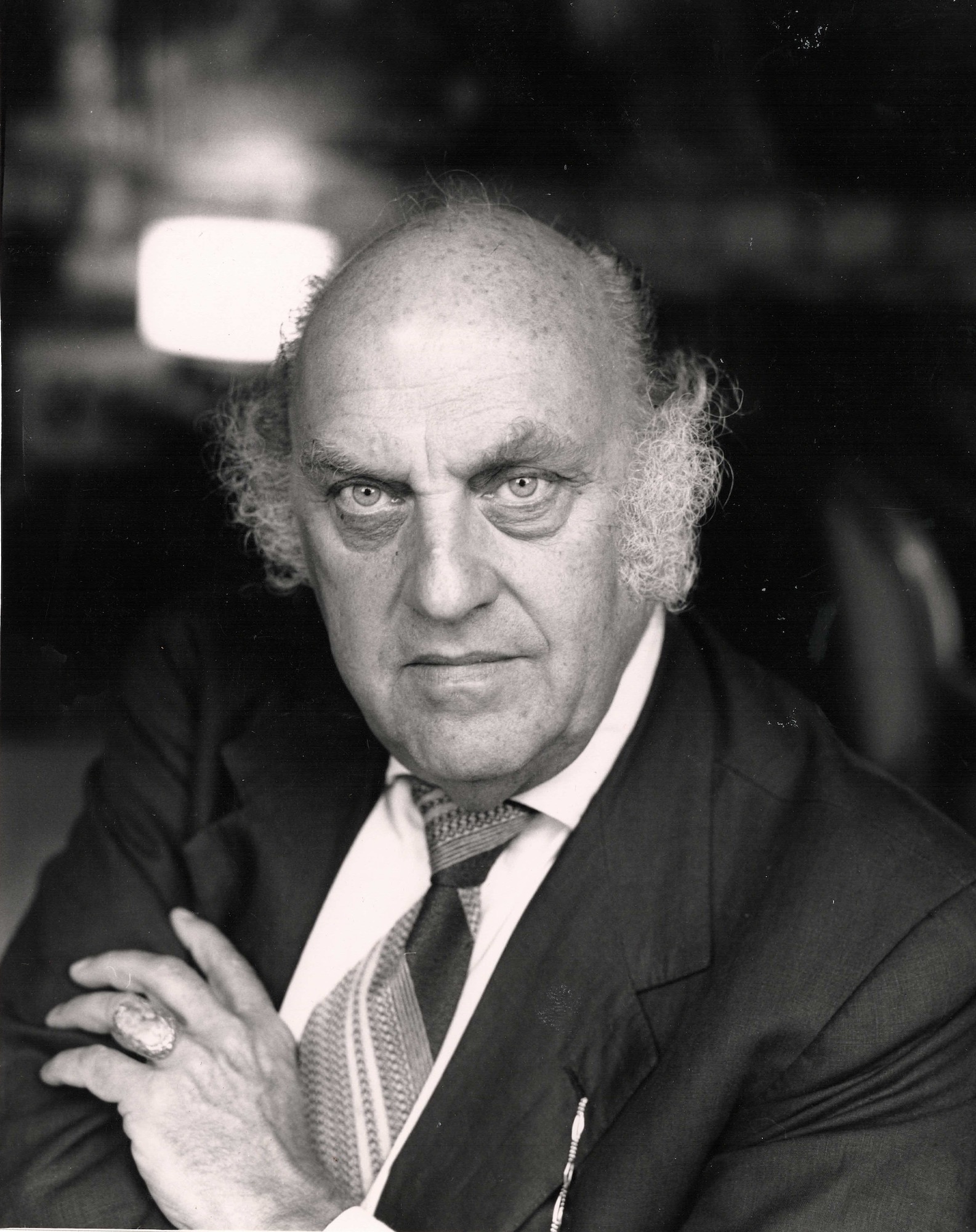
From the late 1960s onward, the Maestro’s connection with the French poet, writer, and filmmaker Jean-Marie Drot became increasingly close. Their friendship first took tangible form in the artist’s book La longue nuit des amants frileux, a large-format work that intertwines Drot’s poetry with Carmassi’s illustrations. In 1979 Drot also dedicated to him the film Arturo Carmassi le Toscan, produced for French television.
In 1986, on the occasion of the tenth anniversary of André Malraux’s death, Drot, then director of the French Academy at Villa Medici, invited Carmassi to a long stay in Rome to participate in the “Cosmogonies” cycle. The project was grounded in Malraux’s idea of the “imaginary museum”, understood as a constellation of works from different eras and civilizations, brought together through internal resonance rather than historical order.
Within this framework, Carmassi developed his own “Cosmogony” articulated in two moments, an essential selection of his pictorial and sculptural production, a personal imaginary museum composed of approximately one hundred works. Within it, African art coexists with masters such as Pablo Picasso, Georges Braque, Henri Matisse, Paul Klee, Joan Miró, Albrecht Dürer, James Ensor, Odilon Redon, Alberto Giacometti, František Kupka, and Robert Delaunay.
“I love the great transgressors of all times,” Carmassi stated, evoking figures such as François Rabelais, Alfred Jarry, Louis-Ferdinand Céline, Antonin Artaud, and Dino Campana, alongside the voice of Dylan Thomas and the verses of T. S. Eliot. He declared himself captivated by the clarity of Stendhal, the magnificence of Lord Byron, and the madness of Oscar Wilde. The Picture of Dorian Gray becomes, in his reading, a metaphor for the metamorphosis of man through time, associated with the myth of the Minotaur, an archetypal figure that runs through the history of imagination.
1981-2015
The legacy of a Master
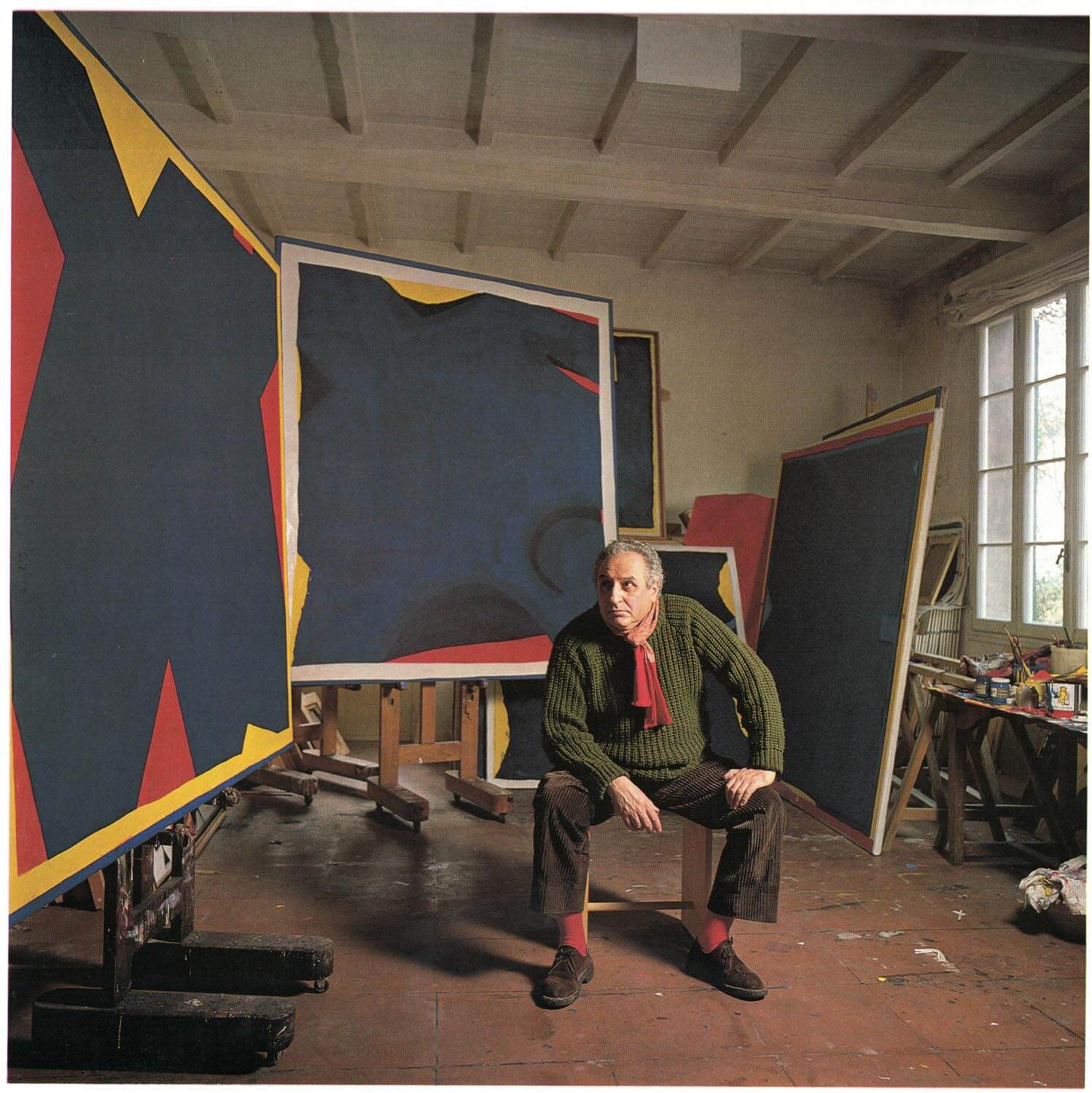
In his later years, while continuing to paint with the same urgency as in his early period, Carmassi combined creation with an active work of testimony and transmission. Together with his close friend Jean-Marie Drot, he devoted himself to the publication of catalogues, the editing of the magazine Summa, and the conception of new collections of his most recent works, as if seeking to leave to the future a complete map of his entire expressive universe.
Arturo Carmassi spent the last years of his life in Torre di Fucecchio, in his beloved Tuscany, surrounded by his creatures of bronze, canvas, and paper, until his death on 27 January 2015.
What remains are his words and his works, testimony to a life entirely devoted to the exploration of the sign and the material of art. Carmassi was not simply a painter, a sculptor, or a printmaker: he was an investigator of the human condition, an archaeologist of the spirit who transformed every canvas, every casting, every engraving into a page of his existential diary. His sands, his collages, his bronzes do not merely recount a personal story, but the entire struggle of a generation that moved through the postwar period, the avant-gardes, disillusionment, and the search for a new humanism.
The task of an artist is not to make paintings, it is to document his passage through the brief history of his human condition. Art is nothing other than the diary of a passing generation. – Arturo Carmassi